Finding a reliable equipment rental service Greensboro contractors and homeowners can depend on means securing heavy machinery without dealing with broker cancellations, hidden drop fees, or sudden downtime. Jobs situated across Guilford County require punctual delivery schedules and clear tonnage limits to keep worksites safe and productive.
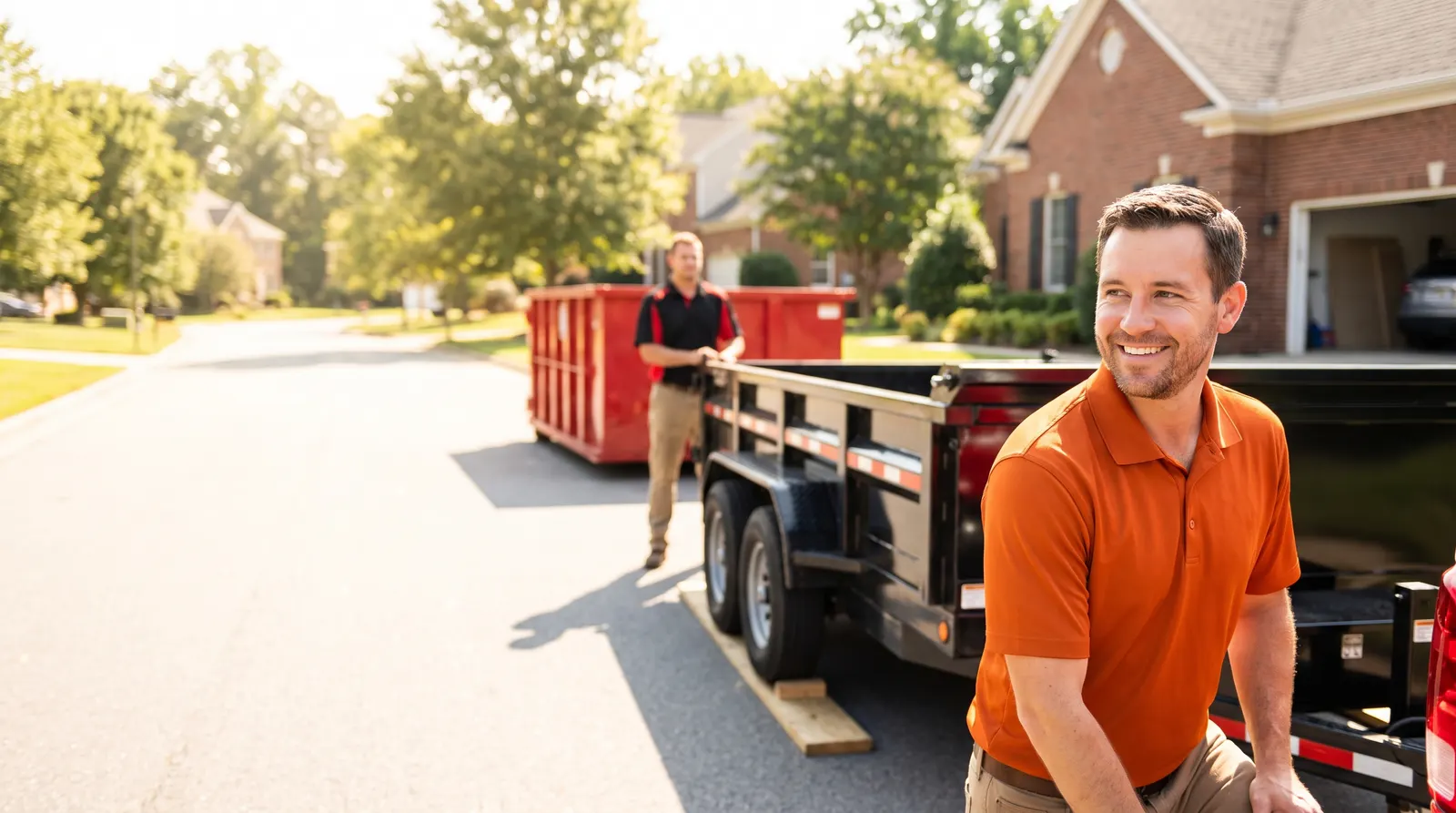
An equipment rental service in Greensboro is an operational machinery dispatch provider that supplies commercial contractors and property owners with earthmoving, compaction, aerial access, and material handling tools on flexible daily, weekly, or monthly terms.
Every service reflects the same meticulous attention to detail, whether it's a single job or a larger equipment rental service project across Greensboro.
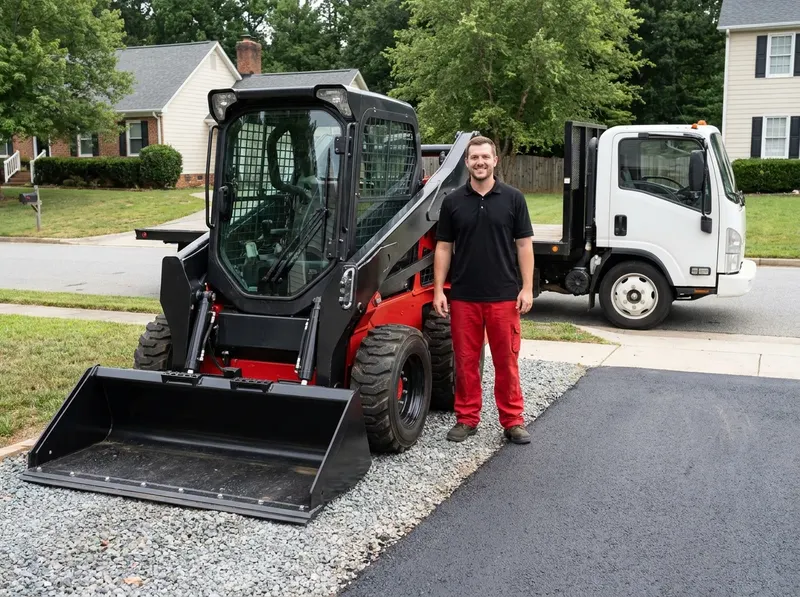
Excavators, wheel loaders, and track loaders provide essential breakout force for grading, digging, and bulk site preparation across regional projects. Mini excavators ranging from 3,500 lbs to 18,000 lbs dig footings, drainage swales, and utility trenches up to 15 feet deep with zero tail swing for zero rear overhang damage against structure walls. Compact track loaders and skid steers operate with rated operating capacities from 1,200 to 3,200 lbs, utilizing quick-attach couplers that power augers, hydraulic breakers, brush cutters, and grading boxes. All machines undergo fifty-point operational inspections before dispatch, ensuring hydraulic hoses, undercarriages, sprockets, and cooling packages handle long duty cycles under peak summer heat or cold winter ground freezes.
Get a quote →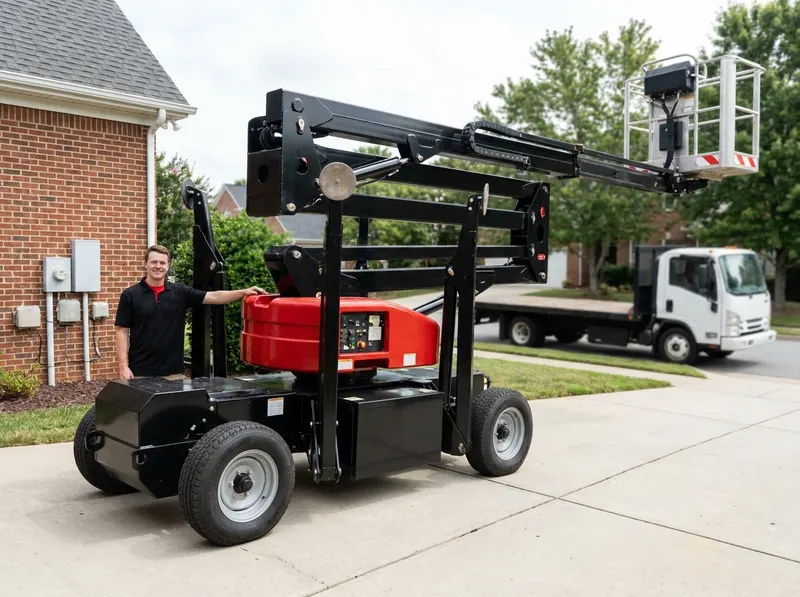
Vertical elevation equipment provides safe elevated platforms for framing, electrical, commercial glazing, mechanical HVAC, and tree maintenance work. Slab scissor lifts offer working heights from 19 to 32 feet, operating with zero-emission electric motors and non-marking tires designed specifically to protect finished concrete and interior commercial floor coatings. Rough-terrain articulating and telescopic boom lifts deliver platform heights from 45 to 85 feet, equipped with four-wheel drive, oscillating front axles, and rough-terrain foam-filled tires to navigate unpaved construction grades. These units feature proportional joystick controls, platform rotation, and dual-capacity envelopes to support operators alongside heavy job materials and tool assemblies.
Get a quote →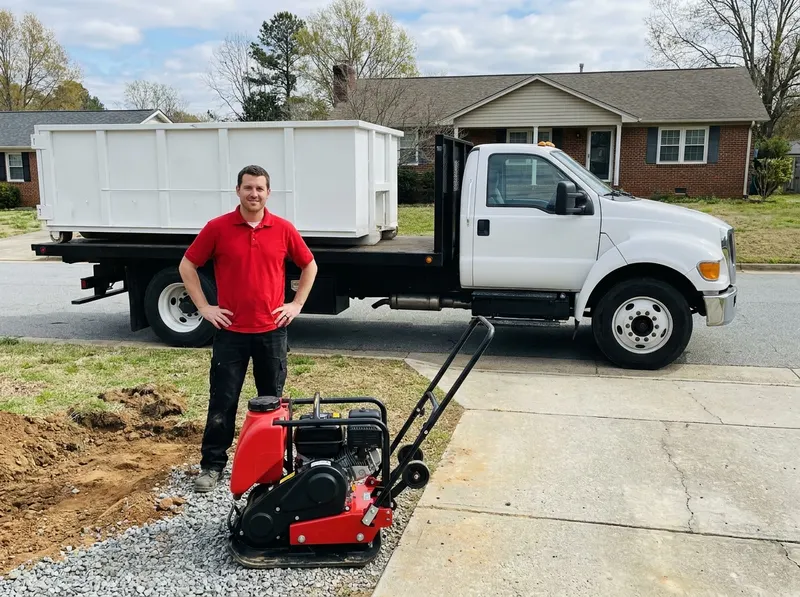
Foundation stabilization and structural flatwork require precise density to prevent post-installation subgrade settling and pavement failure. Vibratory plate compactors generating 3,000 to 9,000 lbs of centrifugal force compact granular soil, road base, and interlocking pavers in tight residential backyards and narrow utility trenches. Trench rollers and walk-behind vibratory rollers provide high-impact kneading for cohesive clay soils, utilizing remote-control systems to keep operators outside the trench collapse hazard zone. Ride-on smooth drum and padfoot rollers from 3 to 10 tons achieve target Proctor densities on commercial parking areas, subdivision access roads, and structural building pads.
Get a quote →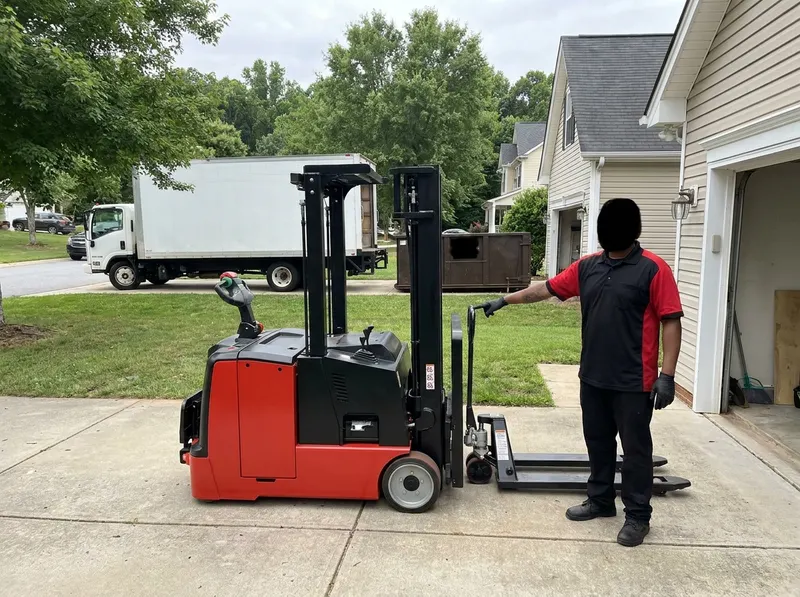
Lifting structural lumber, steel I-beams, masonry block cubes, and mechanical equipment requires robust reach and stable payload management. Telescopic telehandlers with lift capacities from 5,000 to 10,000 lbs and vertical reach limits from 19 to 56 feet safely transport materials across unpaved terrain and place pallets directly onto second-story framing stages. Industrial cushion-tire warehouse forklifts provide smooth material handling indoors with triple-stage masts for high-bay racking systems. Heavy-duty rigging attachments, truss booms, and material buckets expand telehandler capabilities on active commercial construction sites.
Get a quote →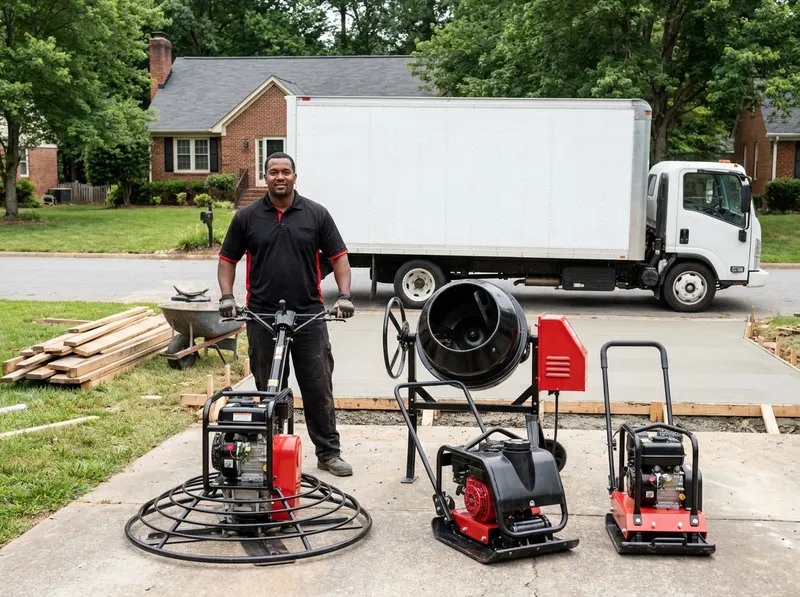
Demolishing, cutting, core-drilling, and finishing concrete demands specialized commercial-grade equipment built for heavy impact. Walk-behind concrete saws with 14- to 26-inch diamond blades cut contraction joints and utility relief cuts through 8-inch reinforced slabs without jagged edges. Electric and pneumatic demolition hammers ranging from 30 to 60 lbs break up footings, retaining walls, and garage aprons. Core drill rigs cut clean mechanical penetrations up to 10 inches in diameter for plumbing and electrical feeds, while walk-behind and ride-on power trowels deliver flat, hard-troweled floor finishes ready for industrial epoxies.
Get a quote →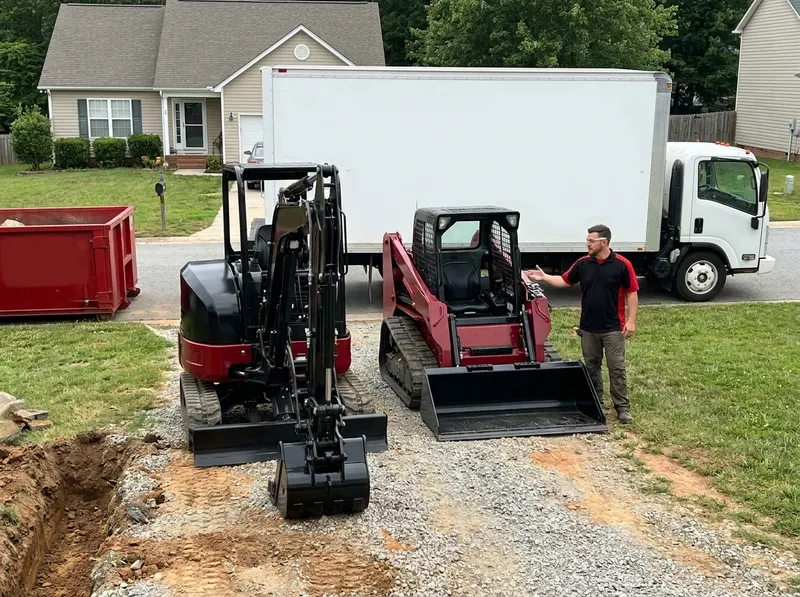
Installing gas mains, communications conduits, water lines, and drainage piping demands targeted subterranean cutting. Walk-behind and ride-on trenching units cut uniform channels from 4 to 12 inches wide down to depths of 48 inches through thick clay and intertwined root zones. Commercial wood chippers process limbs and brush up to 12 inches in diameter to clear right-of-ways, while track-mounted stump grinders eliminate stubborn root systems below finished grade. These specialized units drastically reduce manual labor hours while preserving surrounding turf and hardscape boundaries.
Get a quote →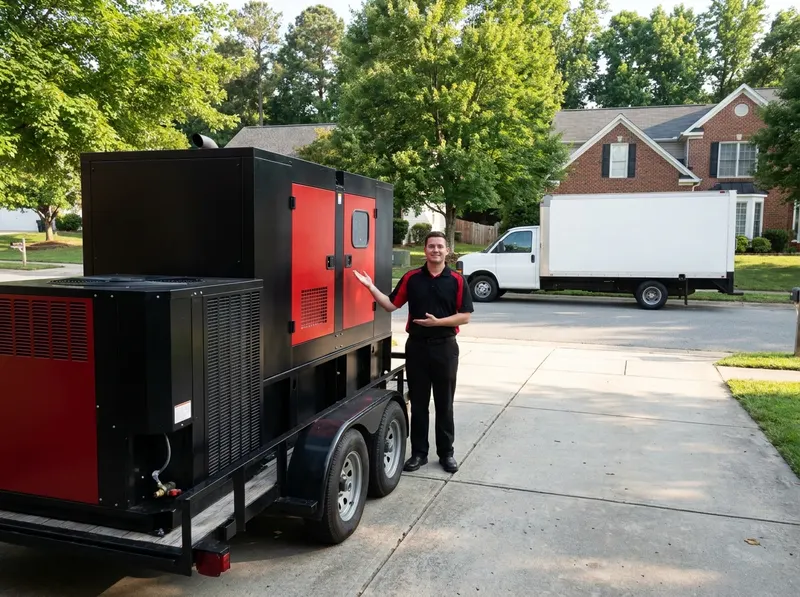
Unpowered job sites and climate-sensitive finishes rely on towable diesel generator units running from 25 kVA to 150 kVA, delivering dependable 120V, 208V, and 480V three-phase electrical power. Commercial desiccant dehumidifiers and high-cfm air movers accelerate drying times for poured concrete slabs, plaster walls, and structural framing. Direct-fired and indirect-fired industrial portable heaters generating up to 400,000 BTUs maintain essential ambient temperatures inside enclosed building shells, allowing crews to continue drywalling, painting, and masonry operations throughout winter freeze cycles without project delays.
Get a quote →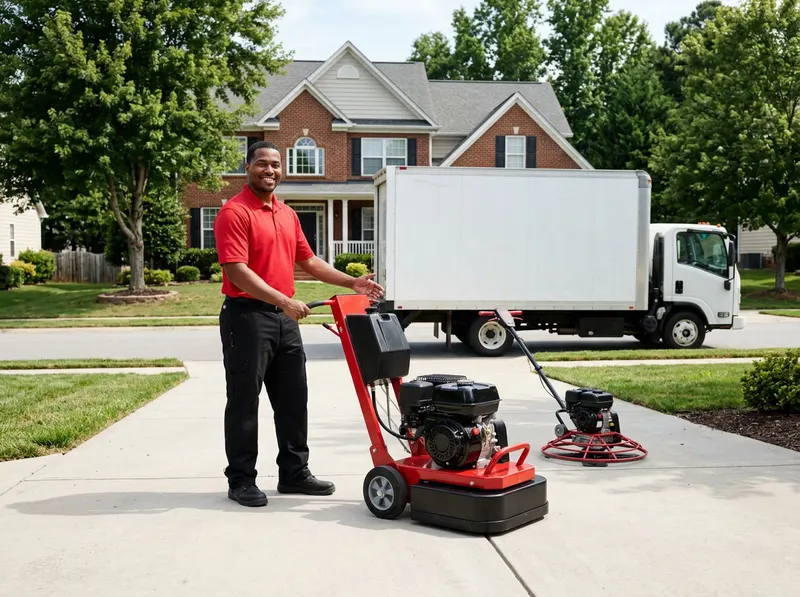
Preparing commercial floors, warehouses, and industrial garages for re-coating requires heavy-duty surface mechanical preparation. Planetary concrete grinders equipped with aggressive diamond tooling strip away urethane sealers, cured epoxies, and carpet adhesives while leveling uneven slab joints. Concrete dust extractors with automatic HEPA filter pulsing capture silica dust at the tool head to preserve site safety. Ride-on and walk-behind automatic floor scrubbers flush and vacuum industrial floors, removing heavy grease, hydraulic fluid, and construction grime before applying new protective coatings.
Get a quote →You get a firm, itemized quote for your equipment rental service before any work begins, no surprises, no pressure.
Careful prep, tidy work, and a full cleanup when we are done. We treat your home and belongings like our own.
The same trusted, background-checked team from the first call to the final check.
Selecting the right machinery profile hinges on ground pressure, clearing dimensions, and total material weight across the job site. If you are clearing subgrade clay for a residential foundation or digging utility footings in tight quarters, choose an 8,000-lb compact mini excavator equipped with a rubber track undercarriage and zero tail-swing capability; if you are moving high-volume aggregate, sub-base gravel, or uncompacted topsoil across an open commercial grade, choose a 74-horsepower compact track loader with an 84-inch tooth bucket. The trade-off is close-quarters maneuverability and minimal soil shearing versus raw cycle speed and bulk payload capacity per pass.
If your work requires reaching overhead tree canopies, setting roof trusses, or installing commercial exterior metal siding, select a 45-foot articulating rough-terrain knuckle boom lift with four-wheel-drive traction; if your project is restricted to smooth interior slab maintenance, ceiling electrical retrofitting, or warehouse rack installation, opt for a 26-foot electric slab scissor lift featuring non-marking solid rubber tires. The trade-off is outdoor gradeability, ground clearance, and axle articulation versus indoor floor load ratings, low overall machine weight, and zero-emission battery operation. If your task involves subgrade electrical conduit or irrigation pipe installation through undisturbed turf, choose a dedicated walk-behind or ride-on trencher that cuts a crisp 4-inch channel; if the job entails multi-utility excavation alongside foundation backfilling, choose a backhoe loader with an integrated front-end loader bucket and an extendable rear excavator arm.
The trade-off is dedicated linear cutting speed with minimal turf disruption versus multi-attachment utility and heavy bucket loading versatility. If you need to consolidate aggregate sub-base beneath an asphalt patch or paver patio, select a 4,500-lb reversible plate compactor; if you are smoothing and compacting large roadway foundations, choose a 66-inch smooth-drum vibratory ride-on roller. The trade-off is localized impact force in narrow trenches versus broad square-foot coverage on unobstructed open civil projects.
Every project gets a firm, written price after a free on-site visit. Ranges below for orientation.
Tell us about your equipment rental service job and we'll send a clear, written quote, usually the same day. Or just call and talk to a real Greensboro pro.
(743) 249-2951
Greensboro sits squarely in the Piedmont red clay belt, meaning heavy seasonal precipitation saturates the subsoil rapidly and turns common work zones into slick, high-suction mud that traps wheeled machinery. In residential districts such as Hamilton Lakes, Starmount Forest, Sunset Hills, and Fisher Park, using track-driven machines is critical to avoid devastating established lawns and rutting subgrades. Delivering machinery along narrow residential corridors off Spring Garden Street, Friendly Avenue, West Market Street, and Battleground Avenue requires specialized flatbed logistics and composite ground protection boards to prevent cracking aging residential asphalt or crushing century-old granite curbs. Guilford County civil regulations also mandate strict sediment and erosion control per the North Carolina Department of Environmental Quality guidelines. Construction projects operating within the North Buffalo Creek, South Buffalo Creek, or Lake Brandt drainage basins must stage certified silt barriers and check dams before breaking subgrade with excavators, trenchers, or skid steers. Proximity to major institutional facilities like the Greensboro Coliseum Complex, University of North Carolina at Greensboro (UNCG), Greensboro Science Center, Tanger Family Bicentennial Garden, and Guilford Courthouse National Military Park creates unique sound envelope and staging restrictions. Low-noise Tier 4 Final diesel generators and zero-emission electric scissor lifts are regularly selected across these corridors to comply with local noise ordinances during renovation schedules. The clay soil structure around Adams Farm and Lindley Park hardens to concrete-like density during dry summer spells, requiring high-breakout hydraulic excavators and rock-tooth trenchers rather than standard light-duty utility attachments.
Free estimates for Greensboro & the surrounding area.
 Pine Bluff Dumpster Rental