Selecting between a slab electric scissor lift and an articulating rough-terrain boom lift comes down to ground pressure, reach envelope, and working obstacles. A 19-foot to 26-foot electric scissor lift works strictly…
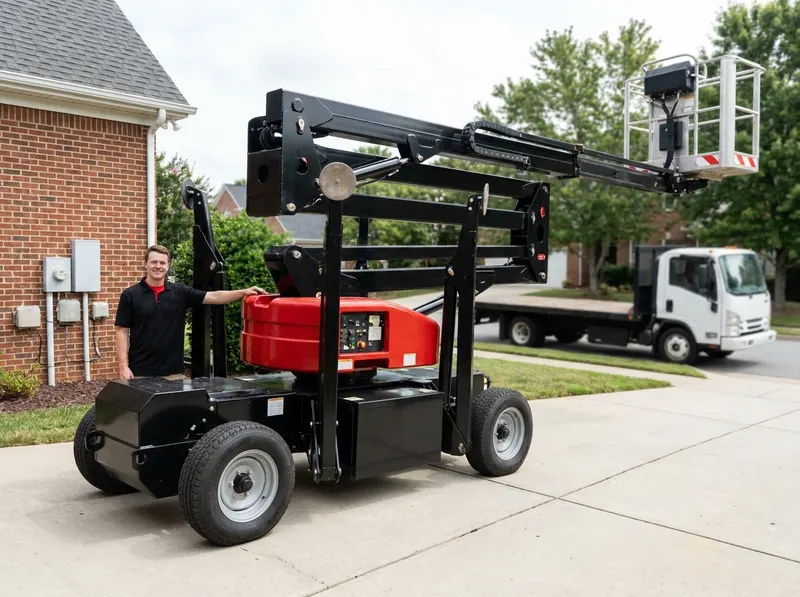
Selecting between a slab electric scissor lift and an articulating rough-terrain boom lift comes down to ground pressure, reach envelope, and working obstacles. A 19-foot to 26-foot electric scissor lift works strictly on cured horizontal concrete pads, fitting through standard 36-inch commercial entry doors to service ceiling grids, conduit runs, and commercial interior painting without producing engine exhaust. In contrast, an articulating boom lift reaching 34 to 45 feet clears multi-story rooflines and mature oak canopies, providing horizontal outreach over porch overhangs and uneven turf. The trade-off centers on site footprint: articulating booms require wider staging clearances and heavier outrigger points, whereas vertical scissors provide larger platform weight limits up to 500 pounds but zero horizontal outreach. A scissor lift cannot substitute for a boom lift when reaching over landscaping beds, and a rough-terrain boom will crack unreinforced residential walkways if driven off designated timber pads.
Neighborhood logistics in Greensboro require precise transport planning to protect historic streetscapes and residential access routes. Deliveries to mature neighborhoods like Fisher Park, Sunset Hills, and Westerwood often encounter low-hanging electrical drops, narrow street parking along curving roads, and 80-year-old water oak limbs that restrict high-clearance rollback haulers. For projects in Lindley Park and Old Irving Park, operators place protective 3/4-inch plywood or composite ground mats over decorative aggregate and stamped concrete driveways to distribute axle loads up to 7,000 pounds, preventing asphalt rutting or surface fractures. In master-planned developments such as Adams Farm, Starmount Forest, and Hamilton Lakes, street placement of heavy aerial equipment requires coordination with municipal right-of-way guidelines, especially when staging near primary corridors like Friendly Avenue, Spring Garden Street, or Battleground Avenue.
Project timelines depend on knowing the exact machine dimensions before the transport carrier arrives. 1. Calculate your working height by adding 6 feet to the platform floor elevation: a 34-foot boom places an operator's hands at roughly 40 feet. 2. Measure access gates and side yards; towable lifts require a standard 2-inch ball hitch and 65 inches of track width, whereas drivable rough-terrain booms need an 8-foot-wide entrance clear of air conditioning condensers or gas meters. 3. Call (743) 249-2951 to lock in delivery staging, ensure battery or fuel fluid levels match the shift duration, and verify your drop-off site permits flatbed ramp deployment.
Every job gets a firm, written price after a free on-site visit.
Tell us about your aerial lift rentals job in Greensboro and we'll send a clear, written quote, usually the same day.
 Pine Bluff Dumpster Rental