Staging massive bundles of masonry or subflooring manually burns critical labor hours and invites worksite injuries. Selecting material handling equipment rentals bridges the logistical gap when delivery flatbeds drop…
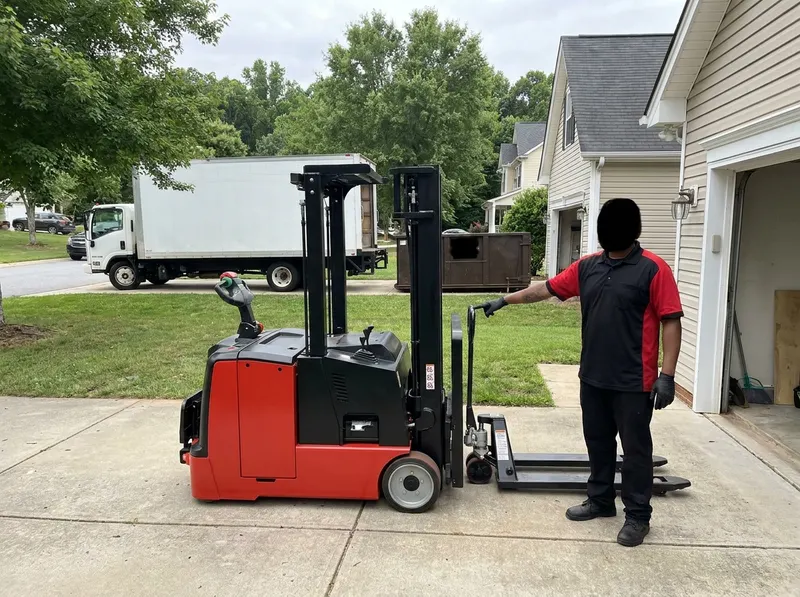
Staging massive bundles of masonry or subflooring manually burns critical labor hours and invites worksite injuries. Selecting material handling equipment rentals bridges the logistical gap when delivery flatbeds drop cargo curbside instead of next to the building envelope. A 5,500-pound manual hydraulic pallet jack operates smoothly on finished concrete slabs or level garage floors; however, moving concrete masonry units across raw soil, wet turf, or crushed stone requires a tracked motorized buggy or rough-terrain fork transport. The mechanical trade-off rests between unit footprint and ground flotation: compact manual hand trucks navigate tight interior residential hallways without wall scuffs, whereas powered track carriers transfer 1,500-pound soil or gravel payloads through unpaved mud while demanding at least 36 to 48 inches of gate clearance.
Local property parameters in historic sectors like Fisher Park, Westerwood, and Lindley Park present severe access challenges, including narrow shared driveways, stone retaining boundaries, and mature root systems. Operating heavy transport equipment over aged asphalt or decorative brick pavers risks costly fractures unless distribution mats distribute wheel weight. Equipment drop-offs incorporate heavy-duty composite runner mats to shield residential surfaces from direct contact, preventing gouges on concrete approaches in Sunset Hills and Old Irving Park. In sprawling suburban settings like Adams Farm, Hamilton Lakes, and Starmount Forest, material dollies expedite long hauls from street parking bays back to detached additions, backyard pool foundations, or rear workshops without damaging manicured turf.
Site execution follows a precise three-step protocol to keep crews on schedule. Step 1: Pinpoint entry dimensions by measuring gate openings, driveway width, and grade steepness before delivery trucks leave the yard. Step 2: Receive the unloaded equipment directly on protective street-side or driveway planks, where delivery drivers demonstrate control throttles, mechanical braking pins, and emergency cutoff switches. Step 3: Stage palletized masonry, structural lumber, or bagged mortar into direct assembly zones, calling (743) 249-2951 as soon as transport operations wrap so retrieval haulers clear driveways before scheduled concrete pours.
Every job gets a firm, written price after a free on-site visit.
Tell us about your material handling equipment rentals job in Greensboro and we'll send a clear, written quote, usually the same day.
 Pine Bluff Dumpster Rental